


Energy Gels Without Caffeine: A Runner's Guide
Energy gels without caffeine are a popular choice for runners and endurance athletes who want to fuel their exercise without taking in extra stimulants.
They provide carbohydrates, which your body uses as an energy source during exercise. Unlike caffeinated gels, they do not add caffeine to your fuelling plan.
But are caffeine-free energy gels effective? When should you take them, and are they a better choice for long-distance running?
The good news is that you do not need caffeine to benefit from an energy gel. Carbohydrates are the main ingredient used to provide fuel during prolonged exercise. Caffeine is an optional extra.
In this guide, we explain how caffeine-free energy gels work, when to use them and how to choose the right option for your training and racing.
What Are Energy Gels Without Caffeine?
Energy gels without caffeine are sports nutrition products designed to provide carbohydrates during exercise without adding caffeine.
They are usually sold in small, portable sachets that are easy to carry during running, cycling and triathlon events.
Most standard sports gels provide around 20–30 g of carbohydrate per sachet, although the exact amount depends on the product. The Australian Institute of Sport (AIS) identifies sports gels as a concentrated source of carbohydrate that can be used immediately before or during exercise.
The main difference between caffeinated and caffeine-free gels is their ingredients.
| Feature | Caffeine-free gel | Caffeinated gel |
|---|---|---|
| Carbohydrates | Yes | Yes |
| Added caffeine | No | Yes |
| Provides fuel during exercise | Yes | Yes |
| Suitable for endurance sports | Yes | Yes |
Both types can provide carbohydrates. You do not need caffeine for a gel to contribute to your energy intake during exercise.
Why Choose Energy Gels Without Caffeine?
There are several reasons why runners and endurance athletes choose caffeine-free energy gels.
1. You Want Carbohydrates Without Extra Stimulants
Carbohydrates are the main reason athletes use energy gels.
During prolonged exercise, your muscles use stored carbohydrate, known as glycogen, as an important fuel source. As exercise continues, these stores can become depleted.
Taking in carbohydrates during exercise helps provide an additional fuel source.
A caffeine-free gel allows you to focus on carbohydrate intake without adding another stimulant to your nutrition plan.
2. You Prefer to Control Your Caffeine Intake
Some athletes prefer to manage their caffeine intake separately from their carbohydrate intake.
For example, you might enjoy coffee before training but prefer not to consume caffeine during your run.
Using caffeine-free gels makes this easier. It also allows you to decide whether caffeine has a place in your race strategy rather than getting it automatically from every gel.
3. You Train in the Evening
If you train after work or later in the day, you may prefer to avoid additional caffeine.
Caffeine can affect sleep, although individual responses vary. Choosing a caffeine-free energy gel allows you to take in carbohydrates without adding caffeine to your evening training routine.
4. You Want a Simple Fuelling Strategy
Not every athlete needs a complicated nutrition plan.
For many runners, a simple approach involving water, carbohydrates and regular food is enough to support their training.
Caffeine-free gels allow you to build a carbohydrate strategy without having to manage additional caffeine intake.
Do Caffeine-Free Energy Gels Still Work?
Yes. Caffeine-free energy gels can still provide carbohydrates to support exercise performance.
It is important to understand that carbohydrate and caffeine have different roles.
- Carbohydrates provide fuel. They are used by working muscles during exercise and can help maintain carbohydrate availability during longer sessions.
- Caffeine is an optional performance aid. It acts on the central nervous system and may influence alertness, perceived effort and exercise performance.
You can benefit from carbohydrate intake without consuming caffeine.
What Does the Research Say?
A study by Cooper and colleagues, published in the European Journal of Sport Science in 2014, compared carbohydrate gels with and without caffeine.
The study involved 12 recreationally trained male athletes completing approximately 90 minutes of intermittent sprint exercise.
Participants received one of three treatments:
- 25 g carbohydrate with 100 mg caffeine.
- 25 g carbohydrate without caffeine.
- A non-caloric placebo.
Both carbohydrate treatments increased blood glucose compared with the placebo during several stages of the exercise test.
The caffeine-containing gel also produced a lower fatigue index than the carbohydrate-only gel after the third exercise block.
However, the study was small and focused on intermittent sprint exercise rather than long-distance running.
This distinction is important. The research does not show that caffeine is required for an energy gel to work. Rather, it suggests that caffeine may provide an additional effect in some exercise settings.
The carbohydrate-only gel still provided carbohydrate.
For runners who want to fuel their sessions without caffeine, this is an important distinction.
How Many Carbohydrates Do You Need During Exercise?
Your carbohydrate requirements depend on the duration and intensity of your activity.
The Australian Institute of Sport provides general carbohydrate intake guidelines based on exercise duration.
| Exercise duration | Suggested carbohydrate intake |
|---|---|
| Less than 45 minutes | Generally not needed |
| 45–75 minutes | Small amounts may help |
| 1–2.5 hours | 30–60 g per hour |
| More than 2.5–3 hours | Up to 90 g per hour |
These are general sports nutrition guidelines, not targets that every athlete must follow.
For example, a runner completing a two-hour training session may aim for 30–60 g of carbohydrate per hour.
This could come from a combination of energy gels, sports drinks and other carbohydrate sources.
How Many Energy Gels Is That?
Let's use a gel containing 20 g of carbohydrate as an example.
| Gels per hour | Carbohydrate per hour |
|---|---|
| 1 gel | 20 g |
| 2 gels | 40 g |
| 3 gels | 60 g |
This is a simple way to understand how gel intake contributes to your overall carbohydrate target.
However, you do not have to get all your carbohydrates from gels. Sports drinks and other foods can also contribute.
If you are aiming for higher carbohydrate intakes during longer events, the type of carbohydrate and your ability to tolerate it become increasingly important.
For more information, read our guide on when to take an energy gel.
When Should You Take a Caffeine-Free Energy Gel?
There is no single correct time to take your first energy gel.
Your strategy should depend on the duration of your session, your carbohydrate target and what you have eaten before exercise.
For shorter sessions, you may not need an energy gel at all.
For longer sessions, it is generally better to plan your carbohydrate intake rather than wait until you feel tired or hungry.
Before Exercise
Some athletes use energy gels before exercise as a convenient source of carbohydrates.
This can be useful if you are unable to tolerate a regular meal or need a compact fuelling option.
The AIS recognises that sports gels can contribute to pre-event carbohydrate fuelling, particularly for athletes who struggle with regular food and fluids.
During Exercise
During longer runs, energy gels can help you reach your carbohydrate intake target.
For example, if you are running for two hours and targeting 40 g of carbohydrate per hour, you could use two gels containing 20 g each per hour.
You could also combine one gel with a sports drink or another carbohydrate source.
The important thing is to plan your total intake.
After Exercise
Energy gels can contribute to carbohydrate intake after exercise, but they should not be your only recovery food.
A balanced meal containing carbohydrates, protein and other nutrients is generally a better option for supporting overall recovery.
Should You Take Energy Gels With Water?
Most traditional energy gels are concentrated sources of carbohydrate.
Taking them with water helps dilute the carbohydrate in your stomach and can improve tolerance.
The AIS recommends that most gels are consumed with water or another dilute fluid. This also allows hydration to be managed separately from carbohydrate intake.
However, there is an exception. Some products are specifically formulated as isotonic energy gels and are designed to be consumed without additional water.
Always check the instructions on the packaging.
What Is the Difference Between Regular and Isotonic Energy Gels?
Regular energy gels
Regular gels are concentrated carbohydrate products. They are generally best consumed with water.
Isotonic energy gels
Isotonic gels are formulated to be consumed without needing additional water to dilute the gel.
The amount of carbohydrate per sachet can vary between products, so always check the nutritional information.
For a more detailed comparison, read our guide to isotonic energy gel vs regular energy gel.
You can also learn more about what an isotonic energy gel is and how it fits into an endurance fuelling plan.
Hydration is another important part of your strategy. Read our guide to hydration before a workout for more information.
How to Choose the Right Caffeine-Free Energy Gel
Not all energy gels are the same. When choosing a product, consider a few important factors.
1. Check the Carbohydrate Content
Look at how many grams of carbohydrate each sachet provides.
This will help you calculate how many gels you need to reach your hourly target.
For example, a gel containing 20 g of carbohydrate provides half of a 40 g hourly target.
2. Check Whether It Contains Caffeine
Do not assume all energy gels are caffeine-free.
Some products contain added caffeine, often listed in milligrams on the nutritional information panel.
If you want to avoid caffeine, check the ingredient list and nutritional information before purchasing.
3. Consider Whether It Is Isotonic
If you prefer a gel designed to be consumed without additional water, an isotonic product may be worth considering.
However, your hydration needs still need to be managed separately.
4. Consider Flavour and Texture
Taste and texture matter, especially during long events.
A gel that tastes good during the first 30 minutes might become difficult to consume several hours later.
Try different flavours and textures during training before using them in competition.
5. Practise Your Fuelling Strategy
Do not wait until race day to try a new energy gel.
Practise taking gels during training to understand how often you need them and how your stomach responds.
This is particularly important when increasing carbohydrate intake.
Are Caffeine-Free Energy Gels Better for Running?
Neither caffeine-free nor caffeinated energy gels are automatically better.
The right choice depends on your preferences, training demands and nutrition strategy.
Caffeine-free gels are a practical choice if you want to focus on carbohydrate intake without additional caffeine.
They can be used during:
- Easy long-distance runs.
- Marathon training.
- Half-marathon training.
- Cycling sessions.
- Triathlon training.
- Long endurance events.
Caffeinated gels may have a place in certain race strategies, but they are not essential for successful endurance fuelling.
A well-planned carbohydrate intake strategy can work perfectly well without caffeine.
Caffeine-Free Energy Gels from Quench
If you are looking for energy gels without caffeine, Quench offers two options designed for endurance training and competition.
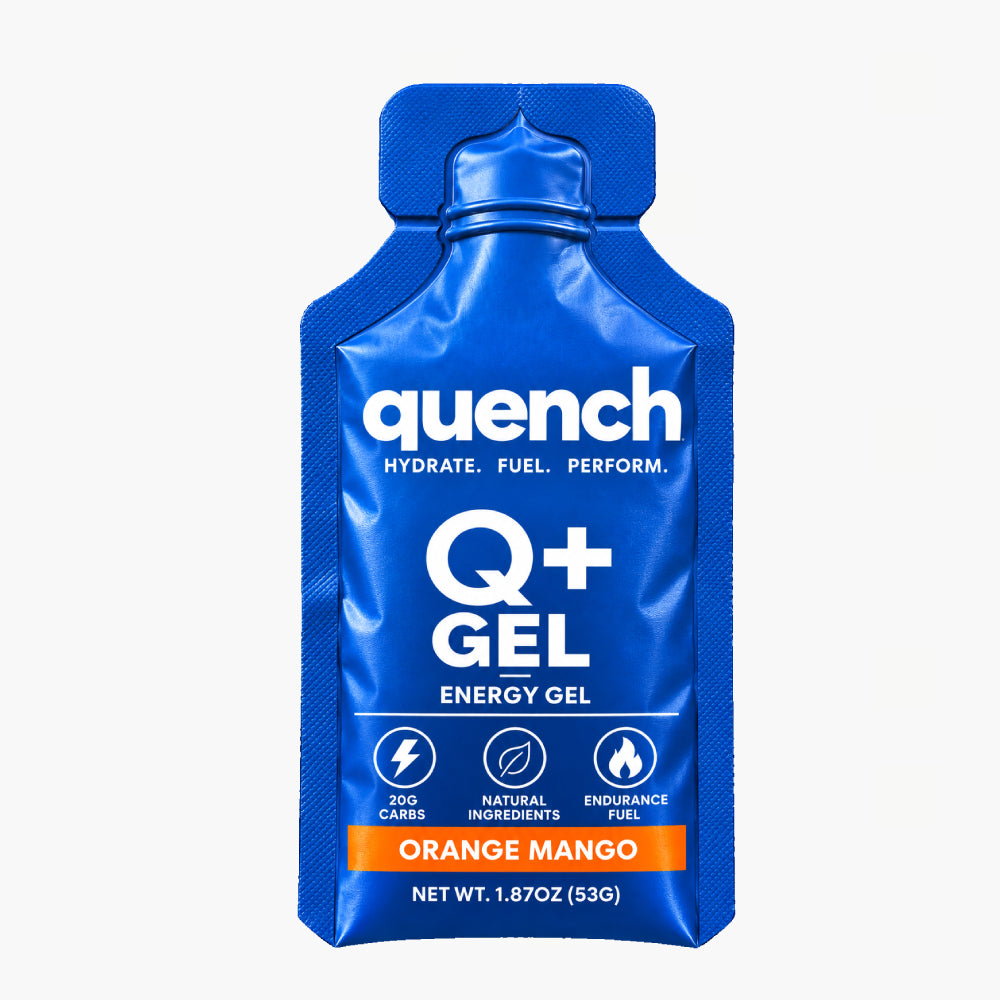
Q+ Gel – Orange Mango
Q+ Gel provides 20 g of carbohydrate per gel and contains no caffeine. It is a convenient carbohydrate source for running, cycling and triathlon.
It is suitable for athletes looking to add carbohydrates to their fuelling plan without caffeine.
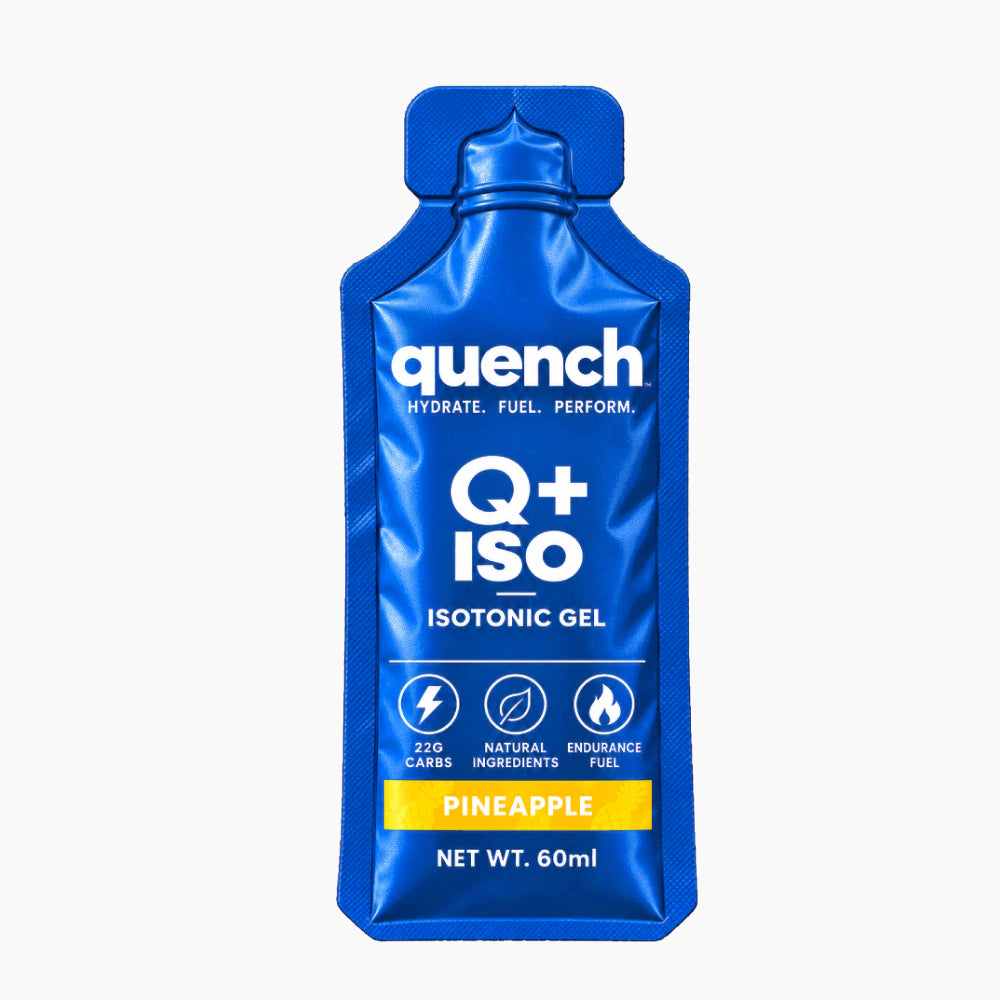
Q+ ISO – Pineapple
Q+ ISO is a 60 ml pineapple-flavoured isotonic energy gel. It is caffeine-free and offers an option for athletes who prefer an isotonic gel format.
Both products provide caffeine-free options for endurance athletes.
The choice between them comes down to your preferred gel format and the carbohydrate intake you are trying to achieve.
Frequently Asked Questions
Are Energy Gels Without Caffeine Effective?
Yes. Caffeine-free energy gels provide carbohydrates that can be used as fuel during exercise. Caffeine is not required for an energy gel to contribute to your carbohydrate intake.
Do Caffeine-Free Energy Gels Give You Energy?
Yes. They provide carbohydrates, which your body uses as an energy source during exercise. They do not provide the additional stimulant effect associated with caffeine.
Can I Use Caffeine-Free Energy Gels for a Marathon?
Yes. Caffeine-free gels can be used throughout marathon training and racing. The important thing is to plan your carbohydrate intake based on your exercise duration and individual requirements.
How Many Caffeine-Free Energy Gels Should I Take During a Run?
This depends on the carbohydrate content of each gel and your hourly target.
For example, if your target is 40 g of carbohydrate per hour, you could consume two gels containing 20 g each.
Remember to include carbohydrates from sports drinks and other foods in your total.
Are Caffeine-Free Energy Gels Better for Evening Workouts?
They can be a convenient choice for evening training because they provide carbohydrates without adding caffeine. This may be useful if you are trying to limit caffeine intake later in the day.
Do Isotonic Energy Gels Contain Caffeine?
Not necessarily. Isotonic describes the formulation of the gel, not whether it contains caffeine. Always check the ingredients and nutritional information.
Can I Take Caffeine-Free Energy Gels Every Day?
You can use them when they are appropriate for your training and fuelling needs. However, most everyday training sessions do not require energy gels. They are primarily designed for situations where additional carbohydrate intake is useful.
References
- Australian Institute of Sport – Sports Gels. Guidance on carbohydrate content, use, hydration and recommended carbohydrate intake during exercise. Read the AIS guidance.
- Cooper, R. et al. (2014). Effects of a carbohydrate and caffeine gel on intermittent sprint performance in recreationally trained males. European Journal of Sport Science. Read the research.

Quench Q+ Daily
Everyday hydration, rethought. Q+ Daily combines essential electrolytes with 150 mg of L-Theanine and B vitamins in one convenient, zero-sugar sachet. M...


Keep Learning
Explore all articles
Carbohydrate Intake for Endurance Athletes: How Much Do You Need?
Learn how much carbohydrate endurance athletes need to fuel running, cycling and triathlon. Discover daily carbohydrate targets, rec...

What Are Electrolytes? Understanding Their Role in Hydration and Exercise
What are electrolytes, and why does your body need them? Learn how sodium, potassium, magnesium and other minerals support hydration...

Hydration Before a Workout: How Much Water Should You Drink?
Learn how to hydrate before a workout, including how much water to drink, when to start and whether electrolytes are necessary. Get ...

Isotonic Energy Gel vs Regular Energy Gel: What's the Difference?
Isotonic or regular energy gel? What's the difference, and which is best for running, cycling and endurance training? Compare carboh...

Please share your name and email so our team can follow up if you're no longer online.