


Sugar Free Hydration Drinks: Benefits, Uses and What to Know
Sugar-free hydration drinks have become a popular choice for people who want to stay hydrated without adding sugar or extra calories to their diet. They are used by runners, cyclists, gym-goers and people looking for an alternative to traditional sports drinks.
But are sugar-free hydration drinks actually effective? Can they replace the fluids and electrolytes lost through sweat? And are they a good choice during long runs or cycling sessions?
The answer depends on what you need from your drink.
Sugar-free hydration drinks can be useful when your main goal is fluid and electrolyte intake without additional carbohydrates. However, they do not provide the same energy as traditional sports drinks containing carbohydrates.
Understanding this difference will help you choose the right drink for your training, racing and everyday hydration needs.
What Are Sugar-Free Hydration Drinks?
Sugar-free hydration drinks are beverages designed to provide fluid and, depending on the product, electrolytes without adding sugar or significant amounts of carbohydrate.
They are different from traditional sports drinks, which usually contain carbohydrates alongside water and electrolytes.
Most sugar-free hydration products focus on two main things:
- Fluid intake: Providing water to help replace fluid lost through sweating.
- Electrolyte intake: Supplying minerals such as sodium and potassium that are lost through sweat.
Some products also contain vitamins, flavourings, caffeine or other ingredients. Their exact composition varies, so it is worth checking the nutrition panel rather than assuming all sugar-free drinks offer the same benefits.
How Do Sugar-Free Hydration Drinks Work?
When you exercise, your body loses water through sweat. Sweat also contains electrolytes, particularly sodium and chloride.
The amount you lose depends on several factors, including:
- Exercise duration and intensity.
- Temperature and humidity.
- Your individual sweat rate.
- The amount of sodium in your sweat.
- Clothing and exercise conditions.
Replacing lost fluid is important because a large fluid deficit can affect how you feel and perform during exercise.
Sugar-free hydration drinks provide another way to consume fluids while supplying electrolytes. Sodium is particularly important because it is one of the main electrolytes lost through sweat.
Why Is Sodium Important?
Sodium helps regulate fluid balance and plays a role in nerve and muscle function.
It is also relevant to drinking behaviour during exercise. The Australian Institute of Sport (AIS) explains that sodium in sports drinks can help support thirst and voluntary fluid intake.
However, more sodium is not automatically better.
Your requirements depend on how much you sweat, how long you exercise and how much sodium you lose. A drink with a low sodium content may not be suitable for someone with high sweat and sodium losses.
This is why checking the sodium content per serving is just as important as checking whether a drink contains sugar.
Do You Need Sugar for Hydration?
No. Sugar is not essential for a drink to provide fluid and electrolytes.
Water can support hydration without carbohydrates, and sugar-free electrolyte drinks can provide another option when you want additional electrolytes without extra carbohydrate intake.
However, sugar and other carbohydrates have a separate purpose during exercise.
They provide energy that working muscles can use during prolonged physical activity. Removing carbohydrates from a drink also removes this source of fuel.
This is an important distinction when choosing a drink for endurance training.
Benefits of Sugar-Free Hydration Drinks
Sugar-free hydration drinks can be useful in several situations. Their main advantage is that they allow you to separate your hydration requirements from your carbohydrate requirements.
1. Hydration Without Added Sugar
One of the main reasons people choose sugar-free hydration drinks is to consume fluids without adding sugar.
This can be useful if you are already getting enough carbohydrates from meals and snacks or simply do not need additional energy from your drinks.
For example, someone completing a short gym session may prefer water or a sugar-free electrolyte drink rather than a carbohydrate-based sports drink.
2. Electrolyte Replacement
Sweating causes you to lose both water and electrolytes.
Sodium is particularly important during prolonged exercise, especially in hot conditions or when sweat losses are high.
A sugar-free hydration drink containing sodium can help replace some of these losses without providing additional carbohydrates.
However, the amount of sodium varies considerably between products.
Look at the sodium content per serve and consider your individual requirements rather than choosing a product based only on its electrolyte claims.
3. A Useful Option for Everyday Hydration
Not every drink needs to provide energy.
If you are working, walking, commuting or completing light exercise, your main requirement may simply be adequate fluid intake.
Water remains an excellent everyday hydration choice.
Sugar-free hydration drinks offer an alternative when you prefer a flavoured drink or want to include electrolytes.
4. Separating Hydration From Sports Nutrition
This is particularly relevant for runners, cyclists and triathletes.
During endurance exercise, fluid and carbohydrate requirements do not always match.
For example, you might need to drink regularly because of warm weather, but you may already be getting enough carbohydrates from energy gels.
Alternatively, you might need more carbohydrates than you can comfortably consume through drinks alone.
The AIS explains that athletes can adjust their strategy depending on whether their fluid or carbohydrate requirements are greater.
Using a sugar-free hydration drink alongside a separate carbohydrate source can therefore be a practical option.
5. More Control Over Carbohydrate Intake
Sugar-free drinks allow you to decide where your carbohydrates come from.
Rather than relying on a carbohydrate-containing sports drink, you can use a separate source of energy when required.
This can make it easier to plan carbohydrate intake during longer training sessions.
It is particularly useful when you want to manage fluid intake and fuelling as two separate parts of your nutrition strategy.
Sugar-Free Hydration Drinks vs Traditional Sports Drinks
The biggest difference between these drinks is their carbohydrate content.
Traditional sports drinks are designed to provide fluid and energy at the same time. Sugar-free hydration drinks focus on fluid and electrolytes without providing meaningful carbohydrate fuel.
| Feature | Sugar-Free Hydration Drink | Traditional Sports Drink |
|---|---|---|
| Fluid | Yes | Yes |
| Electrolytes | Depends on product | Depends on product |
| Carbohydrates | Usually none or very little | Usually contains carbohydrates |
| Energy from carbohydrates | Minimal or none | Yes |
| Main purpose | Hydration | Hydration and fuelling |
| Suitable for endurance fuelling alone | No | Can be |
The AIS reports that typical carbohydrate concentrations in traditional sports drinks are around 6–8 g per 100 ml, although products vary.
This means a 500 ml serving of a drink containing 6–8% carbohydrate would provide approximately 30–40 g of carbohydrate.
A sugar-free drink will not provide the same energy.
Neither option is automatically better. The right choice depends on your exercise demands and nutritional requirements.
Are Sugar-Free Hydration Drinks Good for Running and Cycling?
Yes, they can be useful for running and cycling, but their suitability depends on the duration and intensity of your session.
The most important thing to understand is that hydration and fuelling are two different requirements.
Short Training Sessions
For most sessions lasting less than 45 minutes, additional carbohydrate during exercise is generally not required.
Water will usually be sufficient for normal hydration needs.
A sugar-free hydration drink may also be suitable if you prefer the taste or want to consume electrolytes.
For example:
- A short recovery run.
- An easy 30-minute bike ride.
- A gym session.
- A short walk.
You do not necessarily need a specialised hydration product for these activities.
Moderate Training Sessions
For sessions lasting around 45–75 minutes, carbohydrate requirements depend on intensity and the demands of the activity.
During sustained high-intensity exercise, small amounts of carbohydrate or carbohydrate mouth rinsing may be useful.
A sugar-free hydration drink can still provide fluid, but it does not replace the potential benefits of carbohydrate intake.
For longer sessions lasting 1–2.5 hours, the AIS provides a general carbohydrate target of 30–60 g per hour for endurance exercise.
This is where relying entirely on sugar-free hydration drinks may become a limitation.
Long Endurance Sessions
For long runs, cycling events and triathlons, carbohydrate intake becomes increasingly important.
The AIS recommends up to 90 g of carbohydrate per hour for ultra-endurance exercise lasting more than approximately 2.5–3 hours.
These are general sports nutrition guidelines, not mandatory targets for every athlete. Your pace, intensity, experience and gut tolerance all matter.
A sugar-free hydration drink can still have a place in your strategy, but you will need another carbohydrate source if you have a substantial fuelling target.
For example, you could combine:
- A sugar-free electrolyte drink for fluid and electrolytes.
- Energy gels for carbohydrate intake.
- Water when additional fluid is required.
This approach allows you to manage your carbohydrate intake independently of how much you drink.
When Should You Choose a Sugar-Free Hydration Drink?
There are several situations where a sugar-free hydration drink may be a sensible choice.
| Situation | Suitable Option |
|---|---|
| Everyday hydration | Water or sugar-free hydration drink |
| Short gym session | Water or sugar-free hydration drink |
| Easy recovery run | Water or sugar-free hydration drink |
| Hot-weather training | Water or electrolyte drink, depending on sweat losses |
| Long cycling session | Electrolyte drink plus separate carbohydrate if needed |
| Marathon training | Hydration drink alongside a planned fuelling strategy |
| Long-distance triathlon | Separate fluid, electrolyte and carbohydrate planning |
The key is to match your drink to the demands of the session.
You do not need carbohydrates in every drink you consume. Equally, avoiding sugar should not come at the expense of adequate fuelling during demanding endurance exercise.
What Should You Look for in a Sugar-Free Hydration Drink?
Not all sugar-free hydration drinks are created equal.
Two products might both advertise zero sugar but contain very different amounts of electrolytes.
Here are five things worth checking before choosing one.
1. Sodium Content
Sodium is one of the most important electrolytes to consider when replacing sweat losses.
Check how much sodium is provided per serving, rather than simply looking for the word electrolytes on the packaging.
The AIS reports that typical sodium concentrations in sports drinks vary, with many conventional products providing approximately 46–92 mg per 100 ml.
These figures are descriptive, not a universal target for every athlete.
2. Other Electrolytes
Some products contain additional minerals, including:
- Potassium.
- Magnesium.
- Calcium.
However, more ingredients do not automatically make a product better.
The AIS notes that additional magnesium in sports drinks is unlikely to improve hydration goals or reduce exercise-related cramping when normal dietary intake is adequate.
3. Sugar and Carbohydrate Content
Check both the sugar and total carbohydrate values.
A product marketed as low sugar is not necessarily sugar-free.
If you specifically want to avoid sugar, check the nutrition information panel and serving size.
Also remember that sugar-free does not automatically mean calorie-free.
4. Flavour and Drinkability
The best hydration product is one you are comfortable drinking.
Flavour can influence how much you voluntarily drink, particularly during exercise.
The AIS highlights the importance of taste and temperature when planning fluid intake.
A drink that tastes good and is easy to consume may be more practical than one with a complicated ingredient list.
5. Preparation and Convenience
Consider whether you prefer ready-to-drink products or powdered sachets.
Powdered products can be convenient for carrying in a gym bag, cycling jersey or running pack.
They also allow you to prepare a drink when needed.
Always follow the manufacturer's recommended mixing instructions.
Are Sugar-Free Hydration Drinks Better Than Water?
Not necessarily.
Water is suitable for most everyday hydration needs and many short training sessions.
Sugar-free hydration drinks offer something extra when electrolyte intake is also a consideration.
For example, someone completing a short walk in mild weather will generally have little reason to choose an electrolyte product over water.
However, someone completing a long cycling session in hot conditions may have greater fluid and sodium replacement needs.
The important distinction is that electrolyte drinks are an additional option, not a replacement for water in every situation.
Your overall hydration strategy should reflect your activity, environment and individual sweat losses.
Can You Use Sugar-Free Hydration Drinks During a Marathon?
Yes, but you need to consider your carbohydrate requirements.
A marathon is a prolonged endurance event. Many runners benefit from consuming carbohydrates during the race to support energy availability and maintain performance.
A sugar-free hydration drink can provide fluid and electrolytes, but it will not provide the carbohydrate required to meet an endurance fuelling target.
For example, a runner following a plan that targets 60 g of carbohydrate per hour would need to obtain that carbohydrate from other sources.
These could include:
- Energy gels.
- Carbohydrate-containing sports drinks.
- Sports chews.
- Suitable carbohydrate-rich foods.
Research supports the importance of carbohydrate intake during prolonged endurance exercise.
A 2021 meta-analysis by Bourdas and colleagues examined 96 studies and found an overall performance benefit from carbohydrate solutions consumed during prolonged exercise. This supports the role of carbohydrate-containing drinks when additional energy is required, rather than suggesting that sugar-free drinks are ineffective for hydration.
The practical approach is to plan your fluid and carbohydrate intake separately when necessary, then practise that strategy during training.
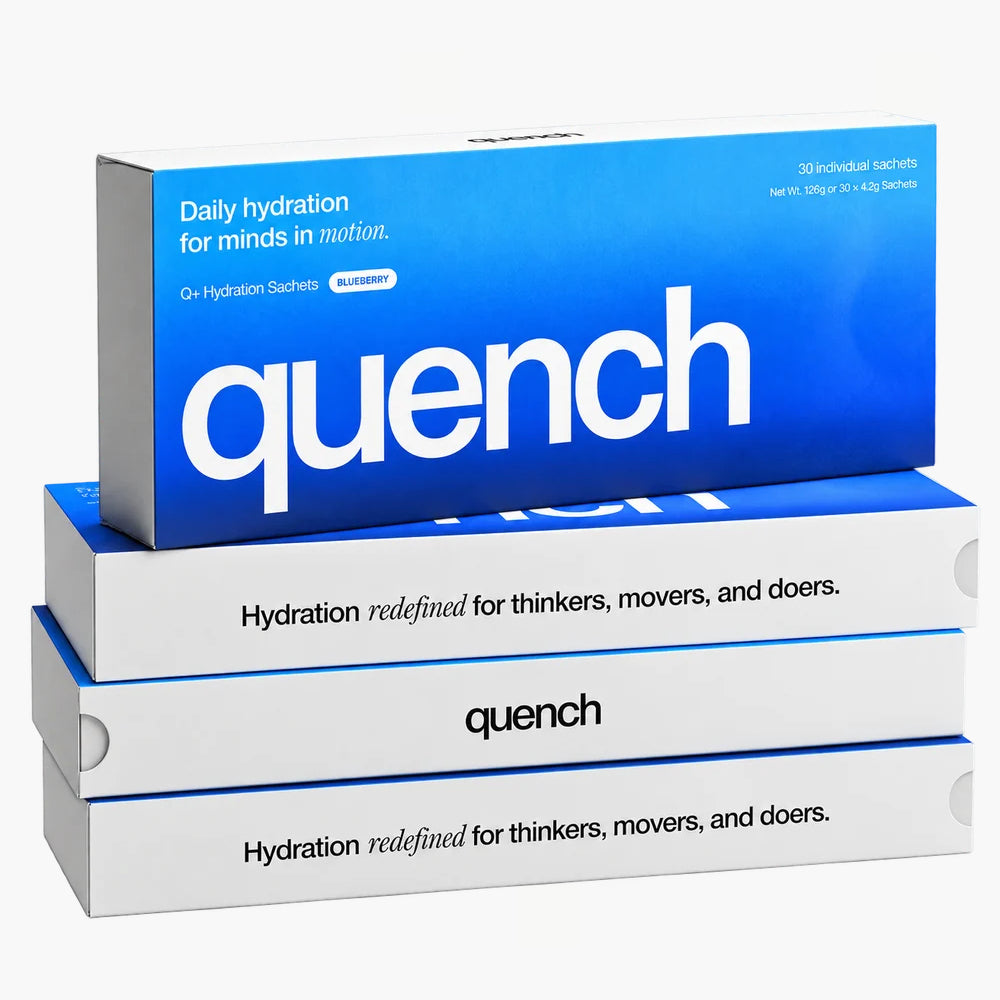
Sugar-Free Hydration and the Quench Q+ Daily
Quench Q+ Daily is a sugar-free, caffeine-free daily hydration product designed to be mixed with water.
Each sachet contains:
- Electrolytes.
- 150 mg of L-theanine.
- B vitamins.
To prepare Q+ Daily, mix one sachet with 400–600 ml of water.
It is an option for people who want a flavoured hydration drink without adding sugar to their daily routine.
For endurance athletes, it is important to understand that Q+ Daily is not a carbohydrate-based sports drink.
If you are preparing for a long run, cycling event or triathlon, you may still need additional carbohydrates from foods or dedicated sports nutrition products.
For example, Quench Q+ Gel provides 20 g of carbohydrate per gel and can be used as a separate carbohydrate source during exercise.
This allows you to approach hydration and energy intake as two separate parts of your sports nutrition strategy.
The Bottom Line: Are Sugar-Free Hydration Drinks Worth It?
Sugar-free hydration drinks can be a useful option when you want fluids and electrolytes without additional sugar or carbohydrate.
They are particularly relevant for everyday hydration, shorter training sessions and endurance athletes who prefer to manage their fluid and energy intake separately.
However, they are not a complete replacement for carbohydrate-containing sports drinks during prolonged, demanding exercise.
For runners, cyclists and triathletes, the best approach is to understand your individual hydration and fuelling requirements.
Use water or a suitable electrolyte drink to manage fluid intake, and include carbohydrates when your training demands them.
The goal is not to avoid sugar at all costs. It is to use the right nutrition for the session.
Frequently Asked Questions
1. Are Sugar-Free Hydration Drinks Good for You?
They can be a useful way to consume fluids and electrolytes without adding sugar. Their suitability depends on the ingredients, electrolyte content and your individual requirements. Water remains sufficient for many everyday situations.
2. Do Sugar-Free Hydration Drinks Actually Hydrate You?
Yes. Sugar is not required for a drink to provide fluid. Sugar-free hydration drinks can contribute to fluid intake, and products containing sodium can also provide electrolytes.
3. Can I Drink Sugar-Free Electrolytes Every Day?
You can include them in your daily routine if they suit your nutritional needs. However, most people do not need an electrolyte supplement every day. Water and a balanced diet are generally sufficient for everyday hydration.
4. Are Sugar-Free Hydration Drinks Better Than Sports Drinks?
Neither is automatically better. Sugar-free drinks are useful when you want fluids and electrolytes without additional carbohydrates. Traditional sports drinks can be more useful during prolonged exercise when you also need energy.
5. Do Sugar-Free Hydration Drinks Contain Electrolytes?
Many do, but the amounts vary. Common electrolytes include sodium and potassium. Always check the product label to understand exactly what you are getting.
6. Can I Use Sugar-Free Hydration Drinks While Running?
Yes. They can provide fluid and electrolytes during running. However, for longer runs, you may also need carbohydrates from energy gels, sports drinks or food.
7. Do Sugar-Free Hydration Drinks Help Prevent Muscle Cramps?
There is no guarantee that an electrolyte drink will prevent cramps. Exercise-associated muscle cramps have several possible contributing factors. Adequate hydration and replacing sodium losses may be relevant in some situations, but cramps should not automatically be attributed to electrolyte deficiency.
8. Are Sugar-Free Hydration Drinks Suitable for Weight Management?
They can be an alternative to sugar-containing drinks when you want to reduce energy intake from beverages. However, they do not directly cause weight loss. Overall dietary intake and energy balance remain important.
9. Can I Use a Sugar-Free Hydration Drink With Energy Gels?
Yes. This can be a practical strategy for endurance athletes. The hydration drink provides fluid and electrolytes, while energy gels provide carbohydrates. Remember to account for your total fluid and carbohydrate requirements.
10. What Is the Difference Between Sugar-Free and Zero-Calorie Hydration Drinks?
Sugar-free refers to the sugar content, while zero-calorie refers to the energy content. They are not necessarily interchangeable. Check the nutrition panel for both sugar and energy information.
References
- Australian Institute of Sport – Sports Drinks. Read the AIS guidance.
- Australian Institute of Sport – What Does It Look Like? Read the guidance.
- Australian Institute of Sport – How and When Do I Use It? Read the guidance.
- Bourdas DI, Souglis A, Zacharakis ED, Geladas N, Travlos AK (2021). Meta-Analysis of Carbohydrate Solution Intake during Prolonged Exercise in Adults: From the Last 45+ Years' Perspective. Nutrients, 13(12), 4223. Read the research.
- Jiménez-Alfageme R, et al. (2025). Nutritional Intake and Timing of Marathon Runners: Influence of Athlete's Characteristics and Fueling Practices on Finishing Time. Sports Medicine - Open, 11, 26. Read the research.
- Maughan RJ, Burke LM, Dvorak J, et al. (2018). IOC Consensus Statement: Dietary Supplements and the High-Performance Athlete. British Journal of Sports Medicine, 52, 439–455. Read the research.

Quench Q+ Daily
Everyday hydration, rethought. Q+ Daily combines essential electrolytes with 150 mg of L-Theanine and B vitamins in one convenient, zero-sugar sachet. M...


Keep Learning
Explore all articles
Energy Gels Without Caffeine: A Runner's Guide
Discover how energy gels without caffeine help fuel your runs and endurance training. Learn how they work, how many carbohydrates yo...

Carbohydrate Intake for Endurance Athletes: How Much Do You Need?
Learn how much carbohydrate endurance athletes need to fuel running, cycling and triathlon. Discover daily carbohydrate targets, rec...

What Are Electrolytes? Understanding Their Role in Hydration and Exercise
What are electrolytes, and why does your body need them? Learn how sodium, potassium, magnesium and other minerals support hydration...

Hydration Before a Workout: How Much Water Should You Drink?
Learn how to hydrate before a workout, including how much water to drink, when to start and whether electrolytes are necessary. Get ...

Please share your name and email so our team can follow up if you're no longer online.