


Hydration Before a Workout: How Much Water Should You Drink?
Knowing how to manage hydration before a workout can make a big difference to how you feel during exercise. Whether you are heading out for a morning run, cycling for a few hours or completing a gym session, starting your workout properly hydrated is important.
But how much water should you drink before exercising? Should you drink plain water or an electrolyte drink? And when should you start drinking?
The good news is that getting your hydration right does not need to be complicated. Most people can maintain good hydration by drinking regularly throughout the day and adjusting their fluid intake around their training.
However, longer workouts, hot weather and heavy sweating can make hydration more important.
In this guide, we explain how to hydrate before a workout, how much to drink, when to start and when electrolytes may be useful.
Why Is Hydration Important Before Exercise?
Water plays several important roles in the body during exercise.
It helps regulate body temperature, supports blood circulation and allows nutrients to move around the body. When you exercise, your muscles produce heat. Your body responds by sending more blood towards the skin and producing sweat to help cool you down.
Sweating causes fluid loss. If you lose more fluid than you replace, your body can become dehydrated.
Starting exercise already dehydrated can make it harder to manage these fluid losses, particularly during longer sessions or exercise in hot conditions.
Research has linked significant dehydration with changes in physical and mental performance, including reduced endurance and difficulty maintaining normal body function.
However, more water is not always better. Drinking excessive amounts can also be dangerous, particularly during endurance exercise, because it can dilute the sodium concentration in your blood.
The aim is to start your workout comfortably hydrated, not to drink as much water as possible.
How Much Water Should You Drink Before a Workout?
There is no single amount of water that suits everyone.
Your hydration needs depend on several factors, including:
- Your body weight.
- How much you sweat.
- The temperature and humidity.
- The duration and intensity of your workout.
- How much fluid you have already consumed.
- Whether you have recently completed another training session.
A position paper from the German Nutrition Society recommends approximately 5–10 ml of fluid per kilogram of body weight during the 2–4 hours before exercise.
This provides a useful starting point, rather than a strict requirement for every athlete.
Example: How much water should you drink?
Here is how that recommendation works for different body weights.
| Body weight | Suggested fluid range |
|---|---|
| 60 kg | 300–600 ml |
| 70 kg | 350–700 ml |
| 80 kg | 400–800 ml |
| 90 kg | 450–900 ml |
These amounts represent total fluid intake during the pre-exercise period, not an instruction to drink the entire amount in one go.
If you have been drinking regularly throughout the day and are already well hydrated, you may not need the upper end of the range.
The goal is to begin exercise with a normal fluid balance without feeling bloated or needing frequent toilet stops.
When Should You Drink Water Before a Workout?
Timing your fluid intake is just as important as the amount you drink.
Drinking too much immediately before exercise can leave you feeling uncomfortable. Leaving hydration until the last minute may also make it harder to replace fluid if you are already behind.
A practical approach is to spread your fluid intake across the hours leading up to exercise.
2–4 hours before exercise
This is the main period to focus on hydration.
Drink water gradually and allow your body time to absorb the fluid and remove any excess.
The German Nutrition Society recommends 5–10 ml per kilogram of body weight during this period.
For most everyday workouts, regular drinking and normal meals will help maintain hydration without needing a complicated plan.
30–60 minutes before exercise
You do not necessarily need another large drink at this stage.
If you are thirsty, have not consumed much fluid or are heading into a hot training session, drink according to your needs.
Avoid forcing down large amounts of water just before starting.
10–20 minutes before exercise
If you still feel thirsty, a small drink of water can be useful.
The National Athletic Trainers' Association's 2000 position statement includes a recommendation of 200–300 ml shortly before exercise.
However, this should not be treated as a compulsory amount. Your earlier fluid intake, individual needs and comfort all matter.
Water or Electrolytes: What Should You Drink Before Exercise?
For most short and moderate workouts, plain water is enough.
You do not need an electrolyte drink before every run, ride or gym session.
However, there are situations where electrolytes may be useful.
When is water enough?
Water is generally suitable when:
- You are completing a short workout.
- You have been drinking normally throughout the day.
- You are exercising in mild conditions.
- You are not expecting significant sweat losses.
- You are starting your workout comfortably hydrated.
For example, someone completing a 30–45 minute easy run will usually not need a specialised hydration product beforehand.
When should you consider electrolytes?
Electrolytes are minerals that help regulate fluid balance and support normal muscle and nerve function.
Sodium is particularly important because it is lost through sweat.
An electrolyte drink may be useful when:
- You are training in hot or humid weather.
- You regularly produce large amounts of sweat.
- You have noticeable salt marks on your clothing after exercise.
- You are completing long endurance sessions.
- You have another training session later in the day and need to replace previous fluid losses.
Your requirements will depend on your individual sweat rate and how much sodium you lose.
It is important to remember that electrolytes are not a substitute for water. They are part of a broader hydration strategy.
For athletes who regularly train for long periods, understanding their sweat losses can help them develop a more suitable hydration plan.
Does Hydration Before Exercise Change Depending on Your Workout?
Yes. A short gym session has very different hydration requirements from a three-hour cycling session.
The longer you exercise, the more important it becomes to consider fluid losses during the workout as well as your starting hydration level.
Hydration before running
Running can create significant fluid losses, particularly during summer or longer sessions.
Before an easy run, drinking normally throughout the day is usually sufficient.
For longer runs, especially those lasting more than an hour, it is worth paying closer attention to your hydration.
Consider:
- Drinking regularly in the hours before running.
- Checking that you are not starting thirsty.
- Considering the weather conditions.
- Planning access to water during longer runs.
- Practising your hydration strategy during training.
For marathon and half-marathon training, hydration should be considered alongside your carbohydrate intake.
Hydration before cycling
Cycling can create substantial sweat losses because of the duration and intensity of many rides.
A two-hour ride in warm weather will place different demands on your body compared with a short recovery ride.
Before longer cycling sessions:
- Drink regularly throughout the day.
- Pay attention to your hydration in the 2–4 hours before riding.
- Consider electrolytes if you expect significant sweat losses.
- Prepare bottles for the ride.
- Adjust your fluid plan according to the weather and your individual sweat rate.
One advantage of cycling is that you can usually carry more fluid than when running. However, that does not mean you should drink excessively.
Hydration before gym workouts
For most gym sessions lasting around 45–60 minutes, water is generally sufficient.
If you have eaten regular meals and consumed enough fluid throughout the day, there is usually no need for a specialised hydration strategy.
However, high-intensity sessions, indoor cycling classes and training in warm environments can increase sweat losses.
Pay attention to thirst and make sure you have access to water during your workout.
Should You Drink More Water Before Exercising in Hot Weather?
Yes, your hydration strategy may need to change when exercising in hot conditions.
Your body produces sweat to help regulate temperature. When temperatures rise, and particularly when humidity is high, managing body heat becomes more difficult.
You may also lose more fluid during exercise.
This is particularly relevant for Australian athletes training during summer.
If you are preparing for a hot-weather session:
- Start drinking regularly earlier in the day.
- Pay attention to your hydration during the 2–4 hours before exercise.
- Consider an electrolyte drink if you expect substantial sweat losses.
- Plan how you will access fluids during exercise.
- Avoid starting a long session already thirsty.
It is also important to adjust your training intensity when conditions are particularly hot.
Do not try to compensate for excessive heat by drinking large amounts of water immediately before exercise.
Hydration is only one part of managing heat stress.
How Can You Tell If You Are Properly Hydrated?
There are several practical ways to monitor your hydration.
One of the simplest is to pay attention to urine colour.
1. Check your urine colour
Pale yellow urine is generally a useful sign that you are reasonably well hydrated.
Dark yellow urine can indicate that you need more fluid.
However, urine colour is not a perfect measurement. Food, supplements and medications can also affect its colour.
Use it as one guide rather than relying on it alone.
2. Pay attention to thirst
Thirst is another useful indicator.
If you regularly feel thirsty before training, consider whether you are drinking enough throughout the day.
You should not need to force yourself to drink constantly to maintain hydration.
3. Monitor your body weight
For endurance athletes, weighing yourself before and after training can help estimate fluid losses.
For example, if you weigh yourself before and after a ride under similar conditions, the difference can provide an estimate of how much fluid you have lost.
Remember to account for any fluid consumed during exercise.
Over several training sessions, this can help you understand your individual sweat rate and plan your hydration more accurately.
Common Hydration Mistakes Before a Workout
Even experienced athletes can make mistakes with hydration.
Here are some common problems to avoid.
Drinking too much immediately before exercise
Trying to make up for several hours without drinking by consuming a large amount of water just before training is not ideal.
It can leave you feeling uncomfortable and may increase the need to urinate.
Spread your fluid intake throughout the day instead.
Ignoring hydration during the day
Hydration should not start when you put your running shoes on.
Your normal meals, snacks and drinks all contribute to your daily fluid intake.
Building consistent habits is more useful than relying on one large drink before training.
Assuming electrolytes are always necessary
Electrolytes have an important role in sports nutrition, but they are not essential for every workout.
For shorter sessions, water and normal meals are usually enough.
Consider the duration, intensity, temperature and your individual sweat losses before choosing a specialised product.
Drinking more than you need
There is a common belief that athletes should drink as much as possible before and during exercise.
This is not correct.
Excessive fluid intake can cause exercise-associated hyponatraemia, a potentially serious condition where sodium levels in the blood become too low.
Drink according to your needs rather than forcing down large volumes.
Building a Simple Pre-Workout Hydration Routine
You do not need an elaborate hydration plan to prepare for most workouts.
A few consistent habits can help you arrive at training comfortably hydrated.
Here is a simple example for someone training in the morning.
| When | What to do |
|---|---|
| The previous day | Drink regularly with meals and throughout the day. |
| 2–4 hours before | Drink gradually according to your hydration needs. |
| 30–60 minutes before | Check thirst and avoid excessive drinking. |
| Just before training | Have a small drink if needed. |
| During exercise | Drink according to thirst, conditions and expected fluid losses. |
| After exercise | Replace fluids lost during training. |
For longer endurance sessions, your plan should also consider carbohydrate intake and electrolyte replacement.
The Australian Institute of Sport recommends different carbohydrate targets depending on exercise duration and intensity. For endurance exercise lasting 1–2.5 hours, its guidance suggests 30–60 g of carbohydrate per hour.
This is separate from hydration. Water and electrolytes help manage fluid balance, while carbohydrate provides fuel for working muscles.
For longer sessions, both need to be considered.
Where Does Q+ Daily Fit Into Your Hydration Routine?
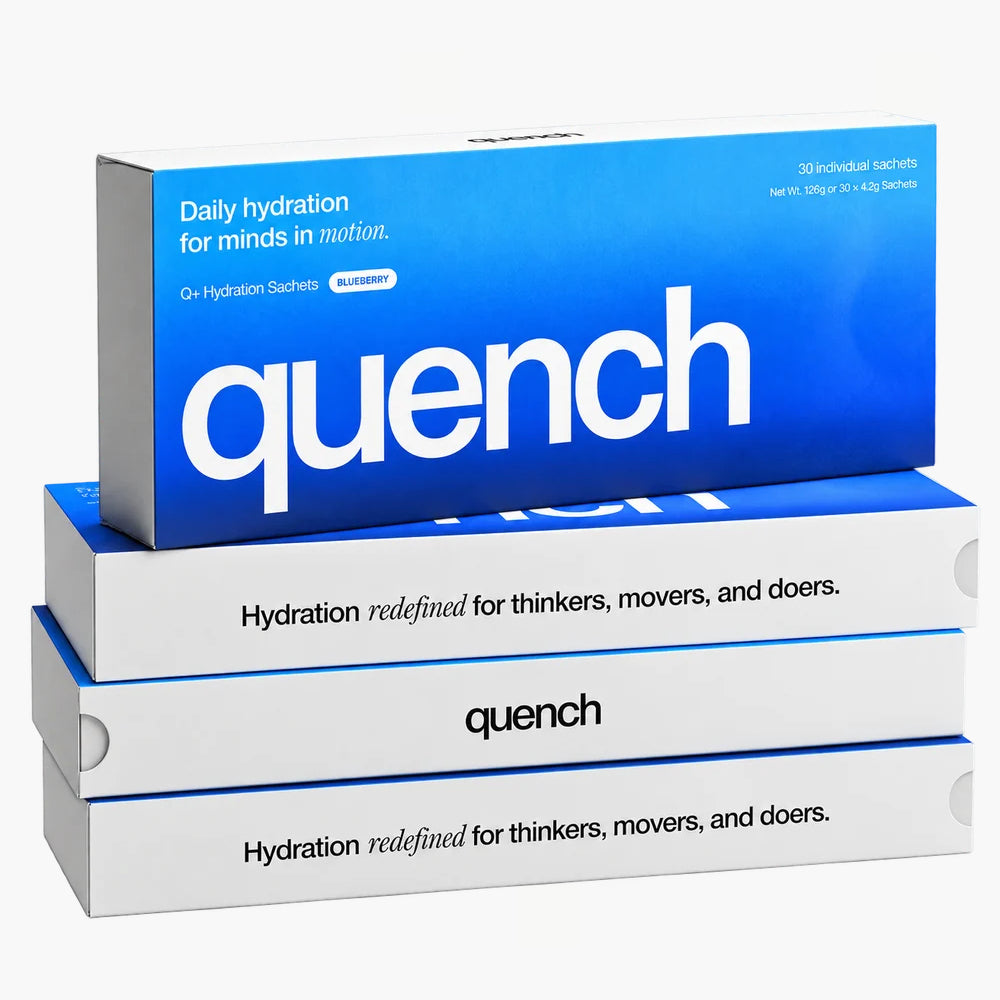
Q+ Daily – Daily Hydration + Focus
Q+ Daily is a sugar-free, caffeine-free hydration product designed for everyday use.
Each sachet contains electrolytes, 150 mg of L-theanine and B vitamins, and is mixed with 400–600 ml of water.
It can be included in your daily hydration routine, including on training days.
The important thing is to remember that your overall fluid intake matters more than any single drink.
Q+ Daily is an option for athletes who want to include electrolytes in their daily routine. It does not replace the need to drink enough water or develop an appropriate hydration plan for longer workouts.
For longer endurance sessions, consider your fluid and carbohydrate requirements separately.
Final Thoughts: Get Your Hydration Right Before Training
Hydration before a workout is about starting exercise with a balanced fluid level, not drinking as much water as possible.
For most people, regular fluid intake throughout the day, combined with sensible drinking in the hours before exercise, is enough.
Longer workouts, hot conditions and heavy sweating may require a more individual approach.
Remember these key points:
- Drink regularly throughout the day.
- Pay attention to thirst and urine colour.
- Use the 2–4 hours before exercise to prepare your hydration.
- Consider electrolytes when sweat losses are significant.
- Avoid drinking excessive amounts of water.
- Practise your hydration strategy during training.
A consistent approach to hydration can help you prepare for training and manage the demands of exercise more effectively.
Frequently Asked Questions
How much water should I drink 30 minutes before a workout?
There is no fixed amount that everyone needs. If you are thirsty, have not consumed enough fluid earlier or are training in hot conditions, a small drink of water may be useful. Avoid drinking large amounts immediately before exercise.
Is it better to drink water before or during a workout?
Both are important. Starting exercise hydrated helps prepare your body for fluid losses, while drinking during longer sessions can help replace some of the fluid lost through sweating.
Should I drink electrolytes before every workout?
No. Water is generally enough for shorter workouts and everyday exercise. Electrolytes may be useful before longer sessions, hot-weather training or exercise where you expect substantial sweat losses.
Is it bad to drink a lot of water before exercising?
Yes, excessive water intake can be harmful. Drinking too much can dilute sodium levels in your blood and increase the risk of exercise-associated hyponatraemia. Drink according to your needs rather than forcing yourself to consume large amounts.
Should I drink water before an early morning workout?
Yes, but you do not need to drink excessive amounts. If you have been drinking normally the previous day, you may already be reasonably hydrated. Have some water when you wake up and adjust according to thirst and the length of your planned session.
Does drinking water before exercise improve performance?
Starting exercise properly hydrated helps support normal body function and reduces the risk of beginning a session with a fluid deficit. However, drinking extra water when you are already hydrated does not guarantee better performance.
Can I drink electrolytes instead of water before a workout?
Electrolyte drinks contribute to your fluid intake, but they are not automatically better than water. Your choice should depend on your sweat losses, exercise conditions and individual needs.
What colour should urine be before exercise?
Pale yellow is generally a useful sign of adequate hydration. Darker urine may indicate that you need more fluid, although urine colour can also be affected by food, supplements and medication.
References
- Mosler S, Braun H, Carlsohn A, et al. (2020). Position of the Working Group Sports Nutrition of the German Nutrition Society (DGE): Fluid Replacement in Sports. Deutsche Zeitschrift für Sportmedizin, 71, 178–184. https://doi.org/10.5960/dzsm.2020.453
- National Athletic Trainers' Association (2000). Position Statement: Fluid Replacement for Athletes. Journal of Athletic Training, 35(2), 212–224. Read the position statement
- Australian Institute of Sport. How and when do I use it? Sports Gels. Read the AIS guidance
- Wardenaar FC, Hoogervorst D, Versteegen JJ, et al. (2018). Real-Time Observations of Food and Fluid Timing During a 120 km Ultramarathon. Frontiers in Nutrition, 5:32. https://doi.org/10.3389/fnut.2018.00032
- Dos Santos LC, Costa CM, Moura RC, et al. (2025). Effects of carbohydrate supplementation on the performance of endurance athletes: A systematic review. Clinical Nutrition ESPEN, 68, 198–205. https://doi.org/10.1016/j.clnesp.2025.04.021
- Maughan RJ, Burke LM, Dvorak J, et al. (2018). IOC consensus statement: dietary supplements and the high-performance athlete. British Journal of Sports Medicine, 52, 439–455. https://doi.org/10.1136/bjsports-2018-099027

Quench Q+ Daily
Everyday hydration, rethought. Q+ Daily combines essential electrolytes with 150 mg of L-Theanine and B vitamins in one convenient, zero-sugar sachet. M...


Keep Learning
Explore all articles
Energy Gels Without Caffeine: A Runner's Guide
Discover how energy gels without caffeine help fuel your runs and endurance training. Learn how they work, how many carbohydrates yo...

Carbohydrate Intake for Endurance Athletes: How Much Do You Need?
Learn how much carbohydrate endurance athletes need to fuel running, cycling and triathlon. Discover daily carbohydrate targets, rec...

What Are Electrolytes? Understanding Their Role in Hydration and Exercise
What are electrolytes, and why does your body need them? Learn how sodium, potassium, magnesium and other minerals support hydration...

Isotonic Energy Gel vs Regular Energy Gel: What's the Difference?
Isotonic or regular energy gel? What's the difference, and which is best for running, cycling and endurance training? Compare carboh...

Please share your name and email so our team can follow up if you're no longer online.